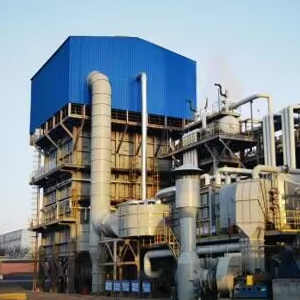
N2O Removal

SCST-102 N2O emission reduction catalyst is a porous irregular cylindrical catalyst, with transition metal oxide as the active component, rare earth oxide as the auxiliary, and various metal oxides as the carriers. The catalyst is mainly used to catalyze the decomposition of N2O produced by agricultural soil mining, production of industrial adipic acid, nitric acid, and fertilizers, as well as chemical processes using nitric acid as an oxidant and coal combustion in fluidized beds. This technology fills the gap in China, and its comprehensive performance has been at the international advanced level.
Physical and Chemical Properties
|
Item |
SCST-102 |
|
Appearance |
Tile gray irregular porous cylinder |
|
Size, mm |
11×11 |
|
Strength (before use), N/grain |
≥60 |
|
Volume Shrinkage (1100℃, 3h), % |
≤2 |
|
Loss on Ignition (1100℃, 3h), % |
≤3 |
Application Conditions
|
Temperature, ℃ |
850~900 |
|
Pressure, MPa |
Normal ~0.5 |
|
Space Velocity of Feed Gas, h-1 |
≤60000 |
|
Emission Reduction Efficiency, % |
≥85 |
Technical Features
Excellent selectivity; comparable catalytic decomposition activity with that of foreign mainstream products;
High strength; wide active temperature range; good activity at high temperature; low thermal shrinkage; international advanced thermal aging resistance.
Natural gas to hydrogen technology
After pre-treatment, natural gas or other light hydrocarbon raw materials are mixed with steam and enter a special conversion furnace. Under the action of nickel catalyst SCST-20X, steam reforming reaction occurs to generate conversion gas containing H2, CO2, CO and other components. After recovering heat from the conversion gas, the conversion gas containing CO2 and H2 is obtained through water vapor shift reaction, and then purified by PSA to obtain high-purity H2. The PSA tail gas is returned to the conversion furnace for combustion and heat recovery.
Conventional Methanol-to-Hydrogen Technology
1. Methanol-to-hydrogen technology has certain advantages among various hydrogen production technologies due to its wide availability of raw materials, technological maturity, ease of operation, economic efficiency, and environmental friendliness.
2. Process Flow: Methanol and steam, under specific pressure and temperature conditions, pass through a methanol-steam reforming catalyst bed to generate reformed gas, whose main products are carbon dioxide and hydrogen. This reformed gas is then subjected to pressure swing adsorption to obtain product hydrogen with a purity of 99.0%~99.999%.
Hot Products
Fe-Mn Bifunctional Desulfurizer
Pre-reforming Catalyst
High Temperature CO Shift Catalyst
Methanation Catalyst
Methanol Steam Reforming Catalyst
High Temperature Methanol Steam Reforming Catalyst
Low-pressure Methanol Synthesis Catalyst

Contact