Hydrogen

Low Temperature CO Shift Catalyst
SCST-231 Low temperature CO shift catalyst is used in the CO shift section of methanol, ammonia and hydrogen plants using synthesis gas such as natural gas, refinery gas, coke oven gas, and blast furnace gas, which can reduce the CO concentration in the outgoing gas to less than 0.3%. The catalyst is suitable for both axial shift converters and axial-radial shift converters, which is used on hundreds of plant over the world. In domestic market, it occupy 50%.
Physical and Chemical Properties
|
Item |
SCST-231 |
|
Appearance |
Luster dark cylinder |
|
Size, mm |
Φ5× 2.5~3.5, Φ5× 4~6 |
|
Strength, N/cm |
≥180 |
Operation Conditions
|
Temperature, ℃ |
175~260 |
|
Pressure, MPa |
≤5.0 |
|
Space Velocity (dry gas), h-1 |
≤3000 |
|
Ratio of Steam/Feed Gas |
0.3~0.6 |
Typical Performance
|
Ordos Chemical Industry Co., Ltd. |
540,000t synthetic ammonia per year |
|
Chemical Fertilizer Branch of Chongqing Jianfeng Chemical Co., Ltd. |
300,000+450,000t synthetic ammonia per year |
|
Ordos Lianhe Chemical Co., Ltd. |
300,000+300,000t synthetic ammonia per year |
|
Xinjiang Tianyun Chemical Co., Ltd. |
300,000t synthetic ammonia per year |
|
CNOOC Hainan Fudao Chemical Co., Ltd. |
300,000t synthetic ammonia per year |
|
Ko Yo Chemical (Group) Limited |
300,000+400,000t synthetic ammonia per year |
|
Sinochem Chongqing Fuling Chemicals Co., Ltd. |
200,000t synthetic ammonia per year |
Natural gas to hydrogen technology
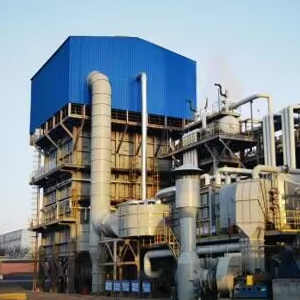
After pre-treatment, natural gas or other light hydrocarbon raw materials are mixed with steam and enter a special conversion furnace. Under the action of nickel catalyst SCST-20X, steam reforming reaction occurs to generate conversion gas containing H2, CO2, CO and other components. After recovering heat from the conversion gas, the conversion gas containing CO2 and H2 is obtained through water vapor shift reaction, and then purified by PSA to obtain high-purity H2. The PSA tail gas is returned to the conversion furnace for combustion and heat recovery.
Conventional Methanol-to-Hydrogen Technology
1. Methanol-to-hydrogen technology has certain advantages among various hydrogen production technologies due to its wide availability of raw materials, technological maturity, ease of operation, economic efficiency, and environmental friendliness.
2. Process Flow: Methanol and steam, under specific pressure and temperature conditions, pass through a methanol-steam reforming catalyst bed to generate reformed gas, whose main products are carbon dioxide and hydrogen. This reformed gas is then subjected to pressure swing adsorption to obtain product hydrogen with a purity of 99.0%~99.999%.
Hot Products
Fe-Mn Bifunctional Desulfurizer
Pre-reforming Catalyst
High Temperature CO Shift Catalyst
Methanation Catalyst
Methanol Steam Reforming Catalyst
High Temperature Methanol Steam Reforming Catalyst
Low-pressure Methanol Synthesis Catalyst

Contact